Posted on 11th May by JuniorDoctorBlog
The Department of Health’s favourite line is “There are 8
independent studies showing a ‘weekend effect'”. I’ve been through these
8 before,
and the terms “independent” and even “studies” are used fairly loosely. This
has been the stick Jeremy Hunt and co have used to justify their unfunded and
unmodelled 7-day NHS plans, and to beat the junior doctors with. This week the
stick broke.
To borrow the Ministry of Truth’s own language: “There are
now 7 independent studies showing that the 7-Day NHS plan is a bad idea”.
Juniordoctorblog explores the counter-evidence against the 7-day
NHS spin.
The ‘Weekend Effect’
Three separate studies this week came out against the
established narrative of ‘poor care’ at weekends creating excess deaths.
“Higher mortality rates amongst emergency patients
admitted to hospital at weekends reflect a lower probability of admission” by Meacock
et al in 2016
All previous research has shown increased rates of dying
amongst patients who are admitted to hospital at weekends, but not those
already in hospital or attending A&E. Meacock
et al used
the same data from the original Freemantle paper that Jeremy Hunt was quoting
his ‘11,000’ excess deaths figure from, which covered 12,000,000 admissions to
all 140 hospitals between 2013-14. They found for patients attending A&E on
the weekend, far fewer were being admitted to hospital vs a weekday. When you
look at all patients attending A&E, as opposed to those being admitted,
there is no weekend effect. The authors attributed this to the differential
admission threshold – well patients are less likely to be admitted on a
weekend, so this makes the group admitted on weekends sicker on average, thus
increasing mortality rates slightly.
Bottom line: the ‘weekend effect’ appears to be about how
patients are counted, not how they are looked after.
Professor
Rothwell, Oxford University, interview on Radio 4
– so far, unpublished study
Now the purists amongst you will claim this is unpublished,
and therefore not available to scrutiny. I agree. However, we are using the DoH
definition of ‘study’, which includes all manner of reports, audits, and human
resources documents. So it’s in the Seven.
Prof Rothwell group based from Oxford Univeristy found
similar problems with the ‘weekend effect’ amongst stroke patients. Looking at
patients in Oxford, they found those labelled ‘strokes’ weren’t
strokes at all, but were admitted for other things, like urgent investigations,
or rehabilitation. These admissions happened primarily on weekdays- meaning
only truly sick stroke patients came on weekends, but weekdays had a mix of
very well patients and unwell patients. Once these was corrected, the weekend
effect disappeared. Prof Rothwell said “nobody had done… the basic due
diligence” on these studies to look at this.
Bottom line: the weekend effect again was found to be a statistical
artifact, based on how patients are counted, not how they are cared for.
“Weekly variation in health-care quality by day and time
of admission: a nationwide, registry-based, prospective cohort study of acute
stroke care” by Bray,
2016
There were a lot of statements about stroke care, and a huge
backlash from stroke experts who had already spent 10 years
improving the urgent care of stroke. Now a new study from Bray that used
national data between 2013-14 on 74,000 patients with stroke found
no association with weekend vs weekday admission. No weekend effect. It
did find variation across many variables in different patterns, including a
small increase in mortality in weekday night admissions. The study called the
weekend effect ‘an oversimplification’.
Bottom line: Again, no weekend effect, small changes on weekday nights, and
further work needed. Oversimplification not helpful.
“What are the Costs and Benefits of Providing
Comprehensive Seven-day Services for Emergency Hospital Admissions?” by Meacock in 2015
Put aside the fact for a moment that the ‘weekend effect’
probably doesn’t exist. Don’t get bogged down in methodology, as
Jeremy Hunt doesn’t. This paper by Meacock in
2015 looked
at the actual size of the supposed ‘weekend effect’ and then worked out the
cost to address it. It found the cost, £1-£1.5 billion, was far higher for the
small supposed benefit than any medication or treatment recommended in the NHS.
Bottom line: even if the ‘effect’ existed, the money would be spent better
elsewhere for greater patient benefit.
“The 7-Day NHS”
So despite the evidence being weak, the government
has plowed forward in making their “7-day NHS” plans. Except they haven’t.
“Managing the supply of NHS clinical staff in England”
Public Accounts Committee 2016
The PAC is a group of MPs that examine public policy
and hold public departments to account for their decisions. This report found
that the Department of Health had made ‘no coherent attempt’ to work
out how much a 7-day NHS would actually cost, or the doctors or nurses
needed to staff it. They
were told they were ‘flying blind’ on
this issue. A
leaked report suggested they needed £1 billion a year, 4000 more
doctors, and it ‘probably wouldn’t alter’ the supposed weekend effect anyway.
Bottom line: close scrutiny of policy for 7-day working found it to be
woefully lacking.
While the 7-day policy seems to be a shambles, a further
report shows the existing NHS heading to disaster;
“Sustainability and financial performance of acute
hospital trusts”
Public
Accounts Committee 2015-16
This second public accounts committee focuses on hospitals
and funding. It revealed that No. 10 created “unrealistic” and
“unsustainable” budget cuts to hospitals. As in the report above,
hospitals had to cut regular staff but many refused to cut quality in favour of
cost- hiring back temporary staff at a higher rate. The committee were clear
that the excess cost running the NHS into a deficit of £2.8 billion was 80% due
to the gaps created, not the fees themselves. The report also found dodgy
accounting practices –
which came from a whistleblowing hospital accountant who requested anonymity
for fear of losing his job. It would seem a lot of ‘creative accountancy’ was
going on to make hospital budgets look healthier than they are, to cover up the
extent of the ‘black hole’ in NHS finances.
Bottom line: NHS hospitals are currently in a budget and
staffing crisis created by No. 10 who then attempted to cover it up.
Still with us?
So far we’ve established that the 7-day NHS is an unfunded
and unmodelled solution to a non-existent problem, which probably isn’t fixable
itself, but even if it was, isn’t cost effective to do so. Meanwhile the real
problems of the NHS are not only being unaddressed they are being actively
covered up.
So what’s it all about then?
Throughout this drive for seven days services has been this
narrative that there aren’t enough doctors at weekends, and this leads to harm;
the ‘weekend effect’.
So having already discussed there is no weekend effect, we should probably
still address this ‘lack of doctors’.
Firstly, no study has ever looked at junior doctor staffing levels. Full stop.
So we actually cannot possibly say that is associated. One
study from the Hateful Eight actually showed that medical cover is
100% across seven days, and this is true, all hospitals have junior doctors
Monday to Sunday, midnight to midnight. Despite this Jeremy Hunt embarked on a
damaging junior contract fight anyway, despite all the evidence to the
contrary.
What’s surprising is that the Department of
Health themselves don’t even know how many juniors are already working
weekends.
Freedom of Information Request to Department of Health 2016 and Commons
Question, 2016
In two unrelated freedom of information releases NHS England
first revealed they had no
idea how many junior doctors typically work on a Saturday or bank holiday
nationally, and then in
a written question from MP Norman Lamb it transpired that the only research
into this that had been done was a ‘snapshot’ of 14 hospital rotas, in January
2016 (well after the contract had already been ‘imposed’, I might add).
Bottom line: despite no evidence to show a link to junior
doctors and weekend mortality issues, a new contract was ‘imposed’ anyway,
without anyone actually studying the problem they were trying to ‘fix’.
Confronted with this last week, the Department of Health
shifted the goalposts once
again– now saying the ‘weekend effect’ is about consultant presence and
diagnostics. Except it isn’t.
“Weekend specialist intensity and admission mortality
in acute hospital trusts in England: a cross-sectional study” by Aldridge in 2016
This is a study looking at a snapshot of weekday to weekend
cover of consultant specialists attending hospital admissions. It found that
consultant specialist presence varied between weekend and weekdays, but found
no link to any change in mortality.
This follows from another study by Bray in 2014 looking
in stroke units specifically whether the presence of a consultant on weekends
and weekdays made a difference to mortality. In that study consultant presence
made no difference, but the number of nurses had a direct link to survival.
Bottom line: in the only study that looked at weekend and weekday mortality in
NHS hospitals there is no link to consultant presence.
Nursing numbers are much more important but this government
cut training places in 2011 and cut the bursary in 2016- the PAC recognised
this would continue the shortage
for at least another three years.
Wrong again.
The Significant Seven are a damning group
of ‘studies’ that highlight how ill thought out and potentially dangerous both
the 7-Day initiative and the current NHS management is. Is this incompetence or
something else?
Let’s change the perspective.
Imagine you are in government. You made a back of the
envelope promise of a ‘7-Day’ NHS without defining anything for voters, but
you’re also ideologically against increasing funds to a socialist medical
system.
You can’t be seen to cut costs to a beloved and vital
national institution, so you announce ‘efficiency’ drives and streamlining of
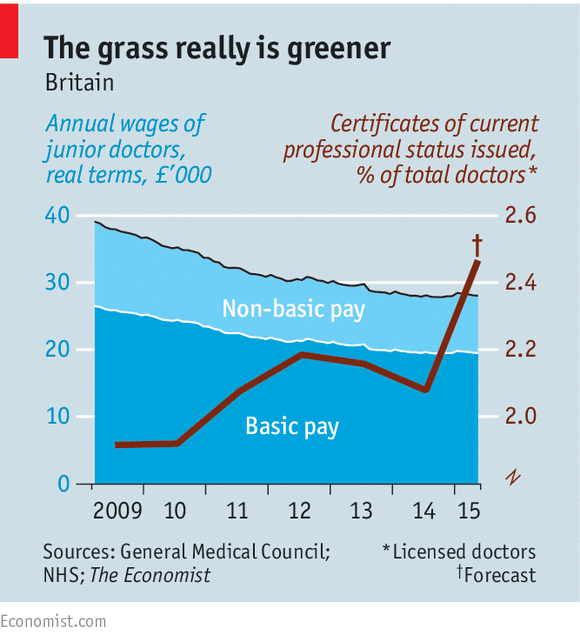
services, a ‘pay freeze’ which cuts
pay by 25% against inflation. You get wind of new NHS contracts, and
decide to make some subtle changes- increase basic pension contribution, reduce
junior doctors pay and remove financial penalties for hospitals that make
doctors work illegal and unsafe hours.
Obviously you can’t be seen to want to attack doctors to cut
costs, you need a PR message that will travel. You find an already running plan
to improve urgent 7-day Care, and in the words of Fiona Godlee, editor of the
BMJ, derail it.
You never really believed hospitals needed that much money, or that costs
really do rise at that rate, so when hospitals started to report crisis level
failings, you didn’t listen. When junior doctors protested and demonstrated and
even sat
outside your office for three weeks, you still didn’t listen.
I am a doctor- I want a 7-day health service more than
anyone, because I know what that would really mean. I also know that we need
more funds just to keep the staff and the hospitals we have already going, and
if we want to ever improve our health service, Mr Hunt, we must use the
evidence properly.
Now the evidence is knocking on your door.
It’s The Significant Seven, and behind them 68 million
people. We’d all like a word about our national health service. It’s time to
listen.
Juniordoctorblog.com