Friday, 30 June 2017

Arrival of the in-laws.

Posted by mumormedic June 29th 2017


So, deep breath, the in-laws are coming today. Don’t get me wrong, I’m actually very lucky and could have done a lot worse in the in-law stakes, they’re kind, considerate, care about the boys and are willing to help if they’re able to (given my FILs ill health and the fact they live on the opposite side of the country this is somewhat limited, but the offer is there for occasional help.). Having said that the whole experience is always somewhat stressful.


My mother in law and I are very different (or maybe I wish we were very different, but actually we’re quite similar, don’t they say something about men marrying a woman like their mothers?). MIL was a full time stay at home mother who raised 4 children who did every extra curricular activity under the sun and, kept an immaculate house (and still does), her children always wore ironed clothes, they had an open house policy and the children always had friends over to play and for tea and her children all excelled at school, played several instruments, partook in multiple sports and could speak more than 1 additional language and this was all from having gone to the local village school. MIL didn’t require any additional help and did all this on her own and loved every minute of it (as we frequently hear). I, on the other hand, work 0.6% FTE and my husband is a full time medical registra. To try and make the work/children/life juggle work I’ve recently given up on trying to be superwoman and despite lack of finances have just thrown money (we don’t have) at the problem. We now have a cleaner, ironing lady and nanny. Despite this my house rarely looks clean, except possibly in the one hour after the cleaner leaves and before the boys get home, the children still don’t wear ironed clothes (but at least I now look less like I’ve just rolled out of bed) and I certainly don’t have an open house policy, in fact I don’t have enough fingers to count on the number of play dates we owe people. Luckily 5 year old boy is popular so despite having a mother who rarely finds time to host a play date, he seems to get invited to play at various friends houses on a regular basis.


Anyway, back to the in-laws, so having rearranged the cleaner to come today rather than at the beginning of the week like she usually does and ordered an online shop so we’d have food in the house, I got home from work to discover the boys have been playing in the garden with the nanny so their was a trail of sand and soil through the downstairs where they’d come in to go to the toilet, get snacks etc and the food that I’d ordered hadn’t arrived, or at least it had arrived, except the only things that had been delivered were toilet rolls, 6 bottles of wine and a case of beer-thinking about it I vaguely remember logging on, booking a slot and starting the shop a few mornings ago after a night shift, when I decided I was actually too tired to shop properly so I checked out with the plan to come back to it later-oh well, the in-laws will now just think I’m an alcoholic with a toilet problem. Off to the supermarket it is then with the boys in tow and hopefully we'll be home before the in-laws arrive and we won't find them sat on our doorstep on our return.

Austerity in essential public services is deadly. Grenfell demonstrates it. The NHS exemplifies it.

Posted by juniordoctorblog June 18th 2017

“I seem, then, in just this little thing to be wiser than this man at any rate, that what I do not know I do not think I know either..”
Socrates 

Apology by Plato

The events of the last week will undoubtedly shape the future of Britain in a monumental fashion. First, an election like none we have seen for fifty years. Called in hubris, led to nemesis, won, in truth, by no one. History-making nonetheless. The prevailing wind of politics has changed, now blowing Left of centre for the first time in nearly a decade. Corbyn has an approval rating of +6, Theresa May a disapproval rating of -34, nearly mirror opposites of where they stood in November. Who knew?

Theresa May and the Conservatives struck a conciliatory tone. “Austerity is over” they said, in radio interviews, in leaked excerpts from backbencher committee meetings. The “mood has changed” they said.

And then Grenfell Tower happened. And the mood changed again.

As details drip out of what will undoubtedly be known as the biggest domestic disaster since Hillsborough, a hazy but consistent picture coalesces. The fire began reportedly in a fourth floor flat, starting with a fridge. The residents had campaigned for years before about power surges in the building, about the risk of a lethal fire with appliances, but sadly, were ignored. Within minutes, it is reported, the fire had spread out of a window and roared up the side of the tower, consuming the external cladding system as one resident described “like matchsticks”. This external cladding had been part of a recent £8.7 million refurbishment, subcontracted by the private enterprise managing the tower, KCTMO, to update the insulation and aesthetic aspects of the outer structure. In the Times today, it is reported that the cladding material used is illegal in structures greater than 18 metres, is flammable when an alternative fire resistant material would’ve cost just £5000 more, and is illegal in Germany and the USA. Sky News’ Faisal Islam shared a BRE presentation this weekend, a diagram of exactly the kind of disaster that befell Grenfell, dated June 2014, three years ago exactly. In summary, we await the public inquiry that must happen, but it seems 58 (at time of writing) people died in a preventable disaster, that was forewarned, already forestalled in other countries, and seems to have been the result of thoughtless (one hopes) cost cutting from a private company.
But, as Damian Green stated in an extraordinary Radio 4 interview, “we must await the experts”.

Which struck a chord with me.

The mantra “prevention is better than cure” is as true in medicine as it is in fire fighting. Much of what we do, day to day, is about preventing future disease, rather than treating it’s corollaries. We use safety cannulas for preventing needlestick injury, we campaign to stop smoking to prevent lung and other cancers, we screen and treat alcoholics on admission to hospital to prevent deadly withdrawal seizures. When we see impending disaster threatening human life, we have a duty to act, as best we can.

A disaster likely already happened in the NHS, and I cannot help but see the parallels with Grenfell. In February of this year a Royal Society of Medicine Report looked into what was explained away by the government as a “statistical blip.”. Since 2010 the death rate in the U.K. was rising, for the first time in fifty years. More people were dying. To be exact, 30,000 “extra” people died in 2015 compared to what was expected. This study attempted to explain where these extra deaths came from. Was it a subpar flu vaccine one season , as Jeremy Hunt, once and current Health secretary, had claimed? No, the study concluded, the only explanation that fit the data was that 30,000 excess deaths were most likely a direct result of cuts to health and social care services.

Let that sink in.

30,000 men and women, potentially your grandmother or father, sister or uncle, whose deaths were in some way contributed to by cuts to services in the name of “austerity”. Like Grenfell, cutting corners and saving pennies, led to a national disaster. Like Grenfell, multiple agencies have limited oversight over the system as a whole. Yes, the buck stops with the government, but I’m sure they can pass it through any number of government and non-government subsidiaries. Like Grenfell, this essential public service, is sub-contracted in places to private companies, beholden to shareholders as much, if not more, than to the public they are supposed to serve. And like Grenfell, warnings about impending disaster, from “experts” and public alike, have fallen on deaf ears. But unlike Grenfell no one saw these deaths for what they were, a national disaster on a behemoth scale.

Austerity kills. It has already potentially killed 30,000 men and women in health and social care. It has killed at least 58 in Grenfell last week. It has killed thousands of disabled people whose benefits were removed just months before they died. Who knows where else this cost-cutting at any cost has cost lives to save pennies?

If you think I’m politicising this tragedy, you have it backwards. The politics came first, then the tragedy.

Which brings me back to where we started. “Austerity is over” they said. The “mood has changed” they said. As if austerity were always a fanciful choice, a frivolity that was chosen on a whim, as one might decide on a suitable tie, or a wallpaper for the living room. I don’t remember anyone claiming austerity was a “mood” when Osbourne and Cameron were laying waste to health and social care budgets, schools and police funding. Austerity was essential, they said. We have to “live within our means” they said. Except some of us didn’t manage to. Potentially as many as 30,000 of us, our most vulnerable.

So now austerity is over. Was it ever actually necessary? The short answer is no. The long answer is, perhaps for a while, but ultimately still no. Despite what the Mail and Sun has peddled for half a decade, the idea the economy is akin to a household budget is laughable. Pretending we only have control of spending in a government trying to “balance the books” is patently stupid; a government sets it’s own revenues, through tax and VAT, NI and council tax, levies and custom duties, subsidies from other countries, like the EU. Austerity was harmful to our economic recovery. This isn’t left wing socialist claptrap, this is mainstream economics. The IMF agrees as did a large backing of the UK’s top economists. This is economic theory that goes back a hundred years. Any economist could’ve told you that. But of course, we had had enough of listening to “experts” then.

Apparently that’s all changed now.

If we are listening to architects and fire officers again, perhaps we could list to economists and health experts again too, to teachers and police federations. To paraphrase Socrates, wisdom is knowing what one does not know. As a doctor I’ve begun to understand this more and more. Being conscious of the limits of my knowledge makes me safer, means I can operate with uncertainty and know where I need a colleague’s advice, or my boss.

In the age of the internet it seems we now know everything, but understand nothing. For too long we all “knew” that austerity was necessary, that “too much red tape” was throttling business and enterprise, that the NHS was “bloated” and spending “too much money”. Did any of us examine where this “knowledge” came from?

Now we see we knew nothing at all. I hope from these tragedies we can salvage some wisdom.

In an impassioned interview, the MP David Lammy spoke about the “safety net” of schools and hospitals, of decent housing, that is falling apart all around us. Austerity has shredded that safety net, and many have died slipping through the gaps.

Austerity is over, they say. I think we can rebuild this safety net, I hope we can fix the NHS.

But then, what do I know?

Juniordoctorblog.com

Tuesday, 21 March 2017

To stop doctors ending their lives, we need to hear from those suffering

Posted Ranaana Srivastava 21st March 2017 
The Guardian


The ceilings soar impressively high, the stained-glass windows are exquisite, and the satin-adorned pews stretch majestically to the dignified altar. Amid the silence punctuated by the barest of sobs, I spot doctors whom I have long lost track of. And row upon row of nurses, still tight years later. As we wait for the service to begin, we imagine we are all silently interrogating our memories about each other. Time parted us for decades before we have gathered in such dreadful circumstances.

“I wanted you to hear it from me,” a colleague had said, audibly upset on the phone. I nearly collided with the pavement when I heard.

She was wonderful, the speakers confirm that morning. Her boss delivers an impassioned eulogy about an inspired clinician and a devoted mother to the children who sometimes tagged along on weekend rounds. Her best friend recalls their last conversation that ended with the doctor saying to the nurse, “Go home, don’t work so hard.”

Her husband quietly expresses gratitude for their years together and grief for the stolen ones. Her parents sit mutely, heads hung low, suddenly and irrevocably aged. A slideshow of pictures, depicting ordinary things – licking ice-cream, dropping off the kids, medical graduation, the first day of internship – suddenly turned unmistakably poignant. The audience is frozen in a horrible dream.

Outside, there is more heartbreak. “We have to say goodbye to Mummy, just us,” the children’s father says softly. We, the gathered, hold our breath lest it makes a sound. Gently, under the flowers she so loved, she is lifted into the car. It’s soon a mere dot on the road. There are refreshments but the crowd disperses awkwardly, wordlessly, not trusting ourselves to speak.

We had known each other well enough in our early days, biding time on endless night shifts, watching dawn break, praying that the nurses would save the next page for the day crew. Later, our lives diverged, each assuming the other was successful, busy and content. The final time I saw her was shortly before she died.

It had been a fractious day; I felt brittle, from a distance she looked happy. What would have happened if we had stopped to talk?

If she had asked, “How are you?” I’d almost certainly have smiled, “Fine.”

And if I had asked, “How are you?”

Could she conceivably have replied, “Suicidal”?

After the gut-wrenching news of her suicide starts the inevitable soul-searching. It was a bad boss. No, a troubled marriage. Parenting had taken its toll. Or her disagreeable colleagues. She seemed so normal in the days leading up to it. No, far from it. She was upset, anxious, disillusioned. The only thing you learn is that for someone who was surrounded by observant and intelligent people, no one really knew much at all. No one knew what went through the mind of a vibrant and capable doctor in the prime of her life, who one day decided that life wasn’t worth living anymore.

Unfortunately, this isn’t the first time I have encountered the suicide of a colleague. Some I had known personally; others were brought close through mutual patients, and still others I would never get to meet because they had ended their life before starting a new rotation. In every instance, other doctors did not realise the depth of their colleague’s mental anguish. “I wondered about her but didn’t want to intrude,” someone ruefully recalled. “I didn’t think it was possible,” reflected another.

Four junior doctors have taken their lives in the past six months in Australia. In my busy hospital, I observe a roundabout of students, residents and specialists in difficulty. But how much difficulty? When they say they’re having a bad time, is it a bad week, a dreadful year, or a tortured life? Are they upset about a rejected grant or do they deem their very existence worthless? Forced smiles and tough hides abound in the workplace, where always being “fine” is a badge of honour. This is why it can be so difficult to distinguish doctors who will indeed be fine from those who need help.

There is ample evidence for the high rates of mental illness in doctors, several times greater compared with other professions and the general population. These figures are quoted so frequently at every orientation that awareness should not be an issue. Practically every institution has an employee assistance program that offers confidential help. Some offer free psychiatric evaluation and counselling. And as with other informal medical consults, many psychiatrists will help a colleague in distress, making access to high-quality help less of an issue for doctors than many others.

Armed with knowledge and surrounded by advice, why do doctors commit suicide at an alarmingly high rate?

I sometimes fear it may be because as a profession, we are reluctant to swallow the evidence. And if we can’t accept the evidence we can’t help ourselves or others. We can have an intellectual discussion about anxiety, depression or suicide and we can apply the knowledge to our patients but identifying vulnerability in our own self is altogether different. No matter how many times we hear it, it still doesn’t seem possible that we, or someone like us, could have a mental illness. The consequences seem so vast, the repercussions so numerous that perhaps it’s better to not know the truthful response to “Are you OK?”

Discrimination, bullying and harassment in medicine are unfortunately never far from the headlines, but thanks to brave people who have risked their career, a victimised doctor has more support than ever before. Nonetheless, a career in medicine means always having to keep up with something, whether it’s the latest research, the newest drugs, the next exam or the upcoming promotion. Doctors would like to be perfect at all of these and are genuinely puzzled when life deals them disappointment. It seems ludicrous now but I was dumbfounded when I got my first mark that wasn’t a distinction. Twenty years later, I realised nothing had changed when my registrar failed his specialist exam and told me that “even the walls” were laughing.

When doctors are depressed, their sense of personal failure is compounded by the suspicion that they somehow lack the ability to pull themselves together. The “well” among them can’t understand how the same stressful hospital ward, the same demanding colleagues, the same rocky tenure track can make some of us angry, others sleepless, and yet others suicidal.

In these pressured times, few doctors would be strangers to a variation of the message, “Heard you’re sick. There’s no cover so let us know whether to cancel your patients.” There is no call more disheartening than one that professes to care about the doctor but can seem like a veiled complaint that says, “If you’re sick, we all suffer.” But while it’s quite easy to tell your colleagues you have pneumonia or a migraine, doctors say the disclosure of mental illness poses a real threat – to license and insurance, career and reputation. The diagnosis invokes not only sadness but also ignominy, which may be why there are so few well-publicised stories of doctors with mental illness.

For much of my career, I have watched policies, promises and campaigns about combating mental illness and suicide in doctors. Our knowledge is evolving and with it, ways of managing mental illness, but with many lives lost each year, we don’t have the luxury of time.

Since we can’t always read the suffering of our colleagues, humanity in all our professional dealings and concern and compassion for every colleague must be a priority. As well as this, a healthy dose of introspection about how we judge doctors with a mental illness and why we judge them differently, arguably more poorly, than our patients.

When it comes to mental illness, we hear a lot from the experts but not enough from the sufferers. But in fact, nothing would be more welcome than the insights of doctors who have endured mental suffering and worse, been on the brink of suicide. What healed them and who helped them? What could their colleagues have said or done differently at the time? What workplace adjustments would have meant the most? These stories are clearly among us – hearing them could illuminate the dark corners of our understanding and help link theory and practice.

As a profession, we must do more than lament our dead colleagues. Dealing effectively with mental illness and halting suicide among doctors requires curiosity, compassion and practical support. Most importantly, it requires the humility to realise that in the long span of a career, none of us are immune and those doctors whom we help today could end up saving our life tomorrow.

  • In Australia, the crisis support service Lifeline is on 13 11 14. In the UK, the Samaritans can be contacted on 116 123. In the US, the National Suicide Prevention Hotline is 1-800-273-8255. 

Wednesday, 8 February 2017

I am a doctor, not a border control officer – Jeremy Hunt won't stop me treating my patients

Posted on 6th February by Rachel Clarke

The Independent


Distraction in healthcare can be a blessing in disguise. As a patient, I have appreciated a kind word, a hand held just as the needle goes in, the dressing is ripped off, the unavoidable pain caused. And as a doctor, how much do I strive to soothe and detract from the unpleasantness I must sometimes inflict on those in my care.

But in health politics, distraction is anything but benign. As the NHS quietly implodes around us, Downing Street’s media tactics exhibit a disturbing trend. Just like her special friend across the pond, Theresa May has fully embraced the power of migrant-bashing to divert attention away from inconvenient news. Those NHS disasters you’ve been hearing so much about – the patients dying in corridors or waiting years for surgeries – that’s right, it’s those filthy foreigners to blame. You know, the migrants clogging up the system, pinching all the GP slots and essentially stealing all of our precious NHS cash.  Anyone would think it was time to seal ourselves within a great big British wall.

The Government has conveniently timed their latest volley against immigrants to cleanse the front pages of the devastating news that a staggering one in six A&E departments are set to be closed or downgraded in the next four years – a direct consequence of Downing Street’s decision to impose £22bn of cuts upon the NHS by 2020. Instead, today’s headlines are screaming about Jeremy Hunt’s new law to force hospitals to deny non-emergency treatment to any “foreign patient” who cannot produce identity documents proving their right to free care.

NHS staff, we are told, will even be issued with credit card readers to take payments at hospital bedsides before any treatment can commence.

As an NHS doctor, I have news for Theresa May. At the bedside, I am my patient’s advocate, neither a tax collector nor a conscripted border guard. My first duty as a doctor is to my patients – not her Trumpist demagoguery – and I will continue to treat according to need and only need, as opposed to country of birth.

As Theresa May is, of course, fully aware, it is her Government’s cost-cutting agenda, not migrants, that imperils our NHS. To inject some facts into Downing Street’s grubby post-truth narrative, so-called health tourism is responsible for a mere 0.3 per cent of NHS spending. The NHS loses more money on missed GP appointments and spends more on stationery. Yet the political choice to impose £22bn of “efficiency savings” is decimating our ability to provide safe, reliable care to our patients. Whipping up anti-immigrant feeling to divert attention from the crisis state of our NHS is like accusing “bad hombres” and Muslims of ruining America – this is cynical, sinister stuff.

Doctors like me fear that this ill-conceived policy will deter some of the very patients who are most in need from seeking healthcare – poor, vulnerable, perhaps unable to speak English, and terrified that a trip to hospital may descend into an interrogation about entitlement to stay. To me, that is the antithesis of the values underpinning our

NHS. I suppose the prospect of an NHS-wide network of bedside chip and pin machines may prove irresistibly seductive to those in government eager to steer NHS funding away from general taxation towards private revenue streams. But using migrant bashing to achieve this? Britain is better than this.

Tuesday, 10 January 2017

'As a doctor, I’d be scared if a family member was taken ill and had to go into hospital': DR MAX PEMBERTON on the NHS crisis

Posted on 10th January by Max Pemberton for The Daily Mail


When will Jeremy Hunt admit what is glaringly obvious to everyone else: the NHS is in crisis?

I never thought I’d say this as a doctor, but I’d be scared if a family member was taken ill and had to go into hospital.

Despite the best efforts of the hard-working staff, I’d worry that all the pressures mean that patients risk being discharged before sufficient preparations are made.

What’s more, some patients are forced to wait for days – that’s right, not an hour or so, but entire days – on trolleys in corridors. The situation has become so commonplace that hospital trusts are now allocating nurses and consultants specifically to corridor duties so as to care for the patients waiting there.

This is what you would expect in a Third World country, not a wealthy, developed nation like ours.

Not only has this resulted in reports of people dying on trolleys while they wait for care, but some doctors and nurses are worried about going to work because they feel powerless to make matters any better.

They face an awful dilemma. A friend who works in A&E put it to me: do I continue to work in a place I know is unsafe and endorse the system by doing so, or do I walk out because I feel I can’t guarantee my patient’s safety?

As for Mr Hunt’s comment yesterday, I’m afraid that problems with the four-hour target to treat A&E patients are a symptom of a much wider issue.

The fact is the rule, introduced by a Labour government, has been exploited by people who see it as an incentive to go straight to A&E units and bypass their GP because they think they will be guaranteed swift treatment.

Hospital staff have warned for some months that we have been nearing crisis-point – and now, with winter here, we have inevitably reached that moment.

So, how has this been allowed to happen? Certainly, Britain’s population of more elderly people has placed increased pressure on the NHS. Improved and costly treatments also drain budgets more quickly.

Hospitals trusts, too, are heavily in debt, often because they are forced to pay huge sums to repay the money that was borrowed to build their facilities.

In addition, there is poor workforce planning by managers which has led to a chronic recruitment crisis, especially in high-pressure services such as A&E. This said, the biggest problem facing hospitals is that they are suffering the knock-on effects of a crisis in the community and GPs surgeries which cannot cope.

Since 2010, there have been cuts to social care budgets – reduced by an estimated 40 per cent and leading to almost one million fewer people now in receipt of social care.

Therefore, hospitals have been forced to keep patients longer than necessary as there is inadequate provision for patients once they have been released.

Indeed, National Audit Office figures show that the number of days that beds have been occupied by patients due to delayed transfers of care have increased by 31 per cent in the period 2013-2015 alone. Then, of course, there is the GP crisis – with doctors’ surgeries facing a huge extra workload.

This has been exacerbated by a disturbing combination of factors: the effect of an increasing number of women GPs, many of whom work part-time; older GPs who have taken advantage of changes to their pensions which have encouraged them to take early retirement; the new contracts introduced in 2004 which allowed family doctors to opt out of evening and weekend work; and burnout suffered by some GPs which has led them to leave the profession or move abroad.

For their part, patients, who have become frustrated and angry over the decline in the standards of care, tend to blame their local GP.

Unforgivably, politicians and hospital managers have, in turn, allowed GPs to be scapegoats for their own failures.

Tragically, this becomes a vicious circle. With fewer GPs, the pressure on A&E units increases and the crisis deepens.

If you want proof of the degree of delusion of NHS bosses, look no further than an utterly idiotic comment last week by Professor Jane Cummings, England’s Chief Nursing Officer. Despite A&E units being overrun with patients and some people waiting for days on trolleys in corridors, she said: ‘The NHS must cut beds for better care.’

I wonder, for example, when was the last time she had to care for an elderly patient with a fractured hip in A&E when there wasn’t a bed available on the orthopaedic ward?

Or had to comfort a confused pensioner with a chest infection who’s been languishing on a trolley in a corridor for the past day and a half?

Scandalously, figures show that Britain has 2.8 beds per 1,000 people, ranking us as one of the lowest relative to population size in the developed world. Our hospitals are also among the fullest, with patient numbers frequently outstripping the number of beds.

These are the facts. As a doctor, I implore you to ignore the spin of people such as Jane Cummings and Jeremy Hunt.

When doctors and nurses are scared that their family members might become sick and need to come into hospital, it is undeniable that there is a monumental crisis.


Tuesday, 13 December 2016

Junior doctors’ strikes: the greatest union failure in a generation

Posted on 8th December by Ahmed Khan

The first wave of junior doctor contract impositions began this week. Here’s how the BMA union failed junior doctors.

In Robert Tressell’s novel, The Ragged-Trousered Philanthropists, the author ridicules the notion of work as a virtuous end per se:

"And when you are all dragging out a miserable existence, gasping for breath or dying for want of air, if one of your number suggests smashing a hole in the side of one of the gasometers, you will all fall upon him in the name of law and order.”

Tressell’s characters are subdued and eroded by the daily disgraces of working life; casualised labour, poor working conditions, debt and poverty.

Although the Junior Doctors’ dispute is a far cry from the Edwardian working-poor, the eruption of fervour from Junior Doctors during the dispute channelled similar overtones of dire working standards, systemic abuse, and a spiralling accrual of discontent at the notion of “noble” work as a reward in itself. 

While the days of union activity precipitating governmental collapse are long over, the BMA (British Medical Association) mandate for industrial action occurred in a favourable context that the trade union movement has not witnessed in decades. 

Not only did members vote overwhelmingly for industrial action with the confidence of a wider public, but as a representative of an ostensibly middle-class profession with an irreplaceable skillset, the BMA had the necessary cultural capital to make its case regularly in media print and TV – a privilege routinely denied to almost all other striking workers.

Even the Labour party, which displays parliamentary reluctance in supporting outright strike action, had key members of the leadership join protests in a spectacle inconceivable just a few years earlier under the leadership of “Red Ed”.

Despite these advantageous circumstances, the first wave of contract impositions began this week. The great failures of the BMA are entirely self-inflicted: its deference to conservative narratives, an overestimation of its own method, and woeful ignorance of the difference between a trade dispute and moralising conundrums.

These right-wing discourses have assumed various metamorphoses, but at their core rest charges of immorality and betrayal – to themselves, to the profession, and ultimately to the country. These narratives have been successfully deployed since as far back as the First World War to delegitimise strikes as immoral and “un-British” – something that has remarkably haunted mainstream left-wing and union politics for over 100 years.

Unfortunately, the BMA has inherited this doubt and suspicion. Tellingly, a direct missive from the state machinery that the BMA was “trying to topple the government” helped reinforce the same historic fears of betrayal and unpatriotic behaviour that somehow crossed a sentient threshold.

Often this led to abstract and cynical theorising such as whether doctors would return to work in the face of fantastical terrorist attacks, distracting the BMA from the trade dispute at hand.

In time, with much complicity from the BMA, direct action is slowly substituted for direct inaction with no real purpose and focus ever-shifting from the contract. The health service is superficially lamented as under-resourced and underfunded, yes, but certainly no serious plan or comment on how political factors and ideologies have contributed to its present condition.

There is little to be said by the BMA for how responsibility for welfare provision lay with government rather than individual doctors; virtually nothing on the role of austerity policies; and total silence on how neoliberal policies act as a system of corporate welfare, eliciting government action when in the direct interests of corporatism.

In place of safeguards demanded by the grassroots, there are instead vague quick-fixes. Indeed, there can be no protections for whistleblowers without recourse to definable and tested legal safeguards. There are limited incentives for compliance by employers because of atomised union representation and there can be no exposure of a failing system when workers are treated as passive objects requiring ever-greater regulation.

In many ways, the BMA exists as the archetypal “union for a union’s sake”, whose material and functional interest is largely self-intuitive. The preservation of the union as an entity is an end in itself.

Addressing conflict in a manner consistent with corporate and business frameworks, there remains at all times overarching emphasis on stability (“the BMA is the only union for doctors”), controlled compromise (“this is the best deal we can get”) and appeasement to “greater” interests (“think of the patients”). These are reiterated even when diametrically opposed to its own members or irrelevant to the trade dispute.

With great chutzpah, the BMA often moves from one impasse to the next, framing defeats as somehow in the interests of the membership. Channels of communication between hierarchy and members remain opaque, allowing decisions such as revocation of the democratic mandate for industrial action to be made with frightening informality.

Pointedly, although the BMA often appears to be doing nothing, the hierarchy is in fact continually defining the scope of choice available to members – silence equals facilitation and de facto acceptance of imposition. You don’t get a sense of cumulative unionism ready to inspire its members towards a swift and decisive victory.

The BMA has woefully wasted the potential for direct action. It has encouraged a passive and pessimistic malaise among its remaining membership and presided over the most spectacular failure of union representation in a generation.

Tuesday, 22 November 2016

Doctors Improving Services - Cover.Care

What The Bleep support doctors who go out to improve and create new services in our healthcare system. 
Introducing:  Cover.Care


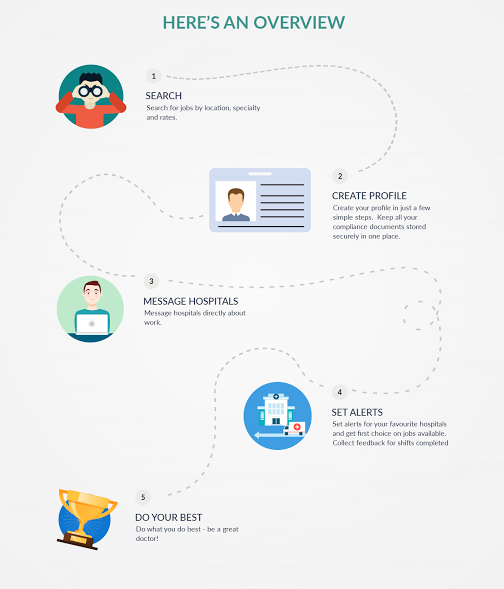
Cover is an online platform to directly match doctors to hospitals when shifts become available. Doctors will be able to use the platform to manage their HR/Compliance documents, state their availability, set alerts for shifts, process their time sheets and manage payments. 

By being completely transparent, we aim to save the NHS money, whilst paying doctors fairly. You can now invite your friends and colleagues and get £50 once they have done a shift.


Future plans
In the future, we aim to integrate rota management into our platform, so ALL doctors will be able to manage their rota in one place.  By gathering data on rota gaps and training shortage, we hope to help the NHS better manage workforce planning. Hopefully, with the use of machine learning, we can develop learning algorithms to anticipate staff demands more intelligently
Our vision is to use smart technology to support a sustainable NHS that will provide for all. 

About us
Bryn Bird - GP with an healthcare focused MBA from Imperial.  He also works with West Ken CCG and is the lead for child protection. 
Li Low - Doctor with a computer science background. I'm a self-taught python programmer with an interest in machine learning.